
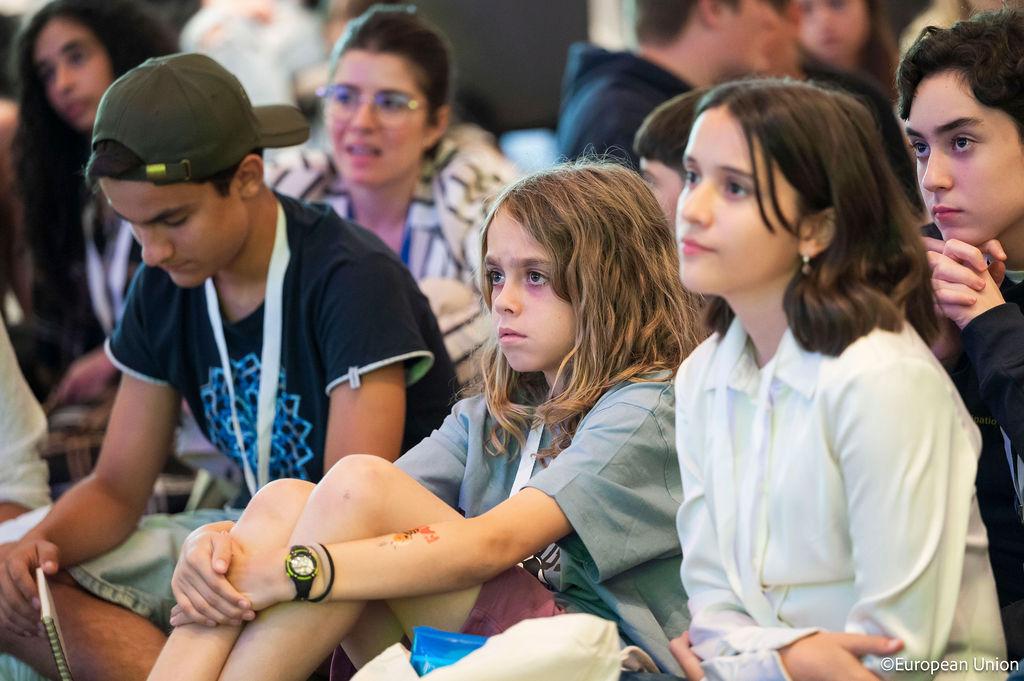
6,343 children and teens shared their insights in an online survey as part of the preparation of the EU Action Plan on Cyberbullying. They shared their experience of cyberbullying, how to prevent it and what support for all those affected should look like.
Results showed that in some areas, lived experiences and needs for support and prevention were different depending on the children’s age. 12-year-olds and 17-year-olds do not experience cyberbullying in the same way. Read on to see some of the differences.
Experience and awareness of cyberbullying
In general, older children had both seen and experienced cyberbullying more than younger children. This is to be expected, as older teens are generally more present and active online.
- 25% of 17-year-olds had experienced cyberbullying compared to 22% of 12-year-olds
- 47% of 17-year-olds had seen cyberbullying happen to someone else compared to 28% of 12-year-olds
- 41% of 17-year-olds are familiar with people being mean online compared to 35% of 12-year-olds
- 38% of 12-year-olds had never see or experienced cyberbullying compared to only 17% of 17-year-olds
Getting help and support
Children’s preferences on where to go for support and help differ according to age.
- Younger children more likely to go to a parent or carer – 76% of 12-year-olds compared to 57% of 17-year-olds
- Younger children are more likely to go to a teacher or school staff – 38% of 12-year-olds compared to only 19% of 17-year-olds
- Older children are more likely to go to a friend for support – 46% of 17-year-olds compared to 29% of 12-year-olds
- Ensuring privacy was more important for older children – 39% of 17-year-olds compared to 26% 12 of 17-year-olds
What children want from adults
What children want from schools, parents and adults is quite similar across all age groups. Where things are different is what they want social media platforms to do.
Younger children are more often asking for guidance, while older children want platforms to take more action.
- 45% of 12-year-olds want to be given more information in simple language, compared to 35% of 17-year-olds
- 60% of 17-year-olds want platforms to take reporting seriously and inform on follow-up, compared to 47% of 12-year-olds