
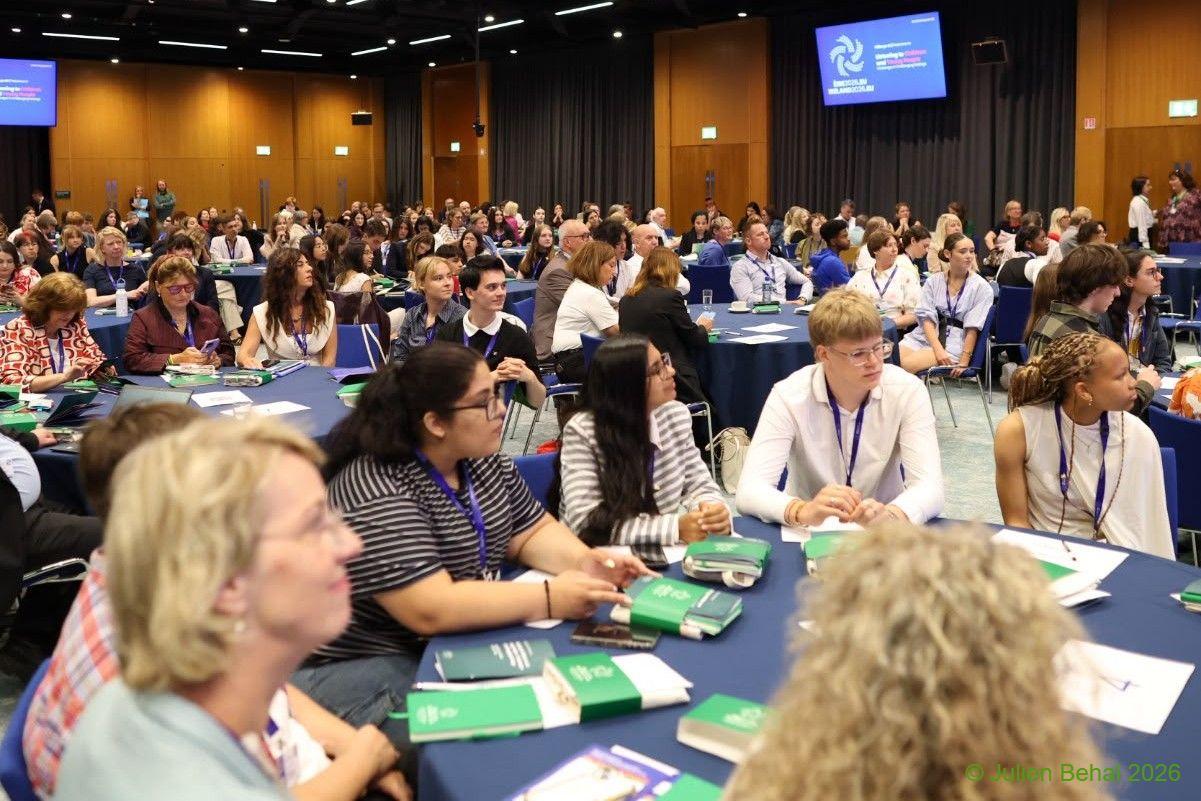
On July 30-31, the Irish EU Presidency organised a High-Level Conference on Listening to Children and Young Peoplein Dublin. 250 people attended, including 80 children and young people.
The objective was to share experiences and learning, and identify key issues and future priorities from across EU countries in relation to children and young people’s participation in decision-making in challenging situations such as justice proceedings, child protection and alternative care arrangements.
There were some parallel sessions for adults while children and young people participated in a consultation about challenges in the digital world and social media bans.
How we participated
20 of our young members and alumni from across Europe were there, with some leading in keynote speeches and discussions, or running a workshop. Loukia and Matthias also joined in the pre-event meetings as part of the Irish Youth Advisory Group.
Speeches and discussions
- On day 1, following a keynote speech from European Commissioner Michael McGrath, he sat down for a one-on-one chat with Gabrielius from Lithuania who is one of our Alumni.
- Commissioner McGrath said that truly democratic society must be representative and inclusive. Which means listening to children – not as an afterthought, but as part of creating better policies and better laws.
- Gabrielius said that children and young people offer perspectives that adults simply do not see and that many children are still unaware of the opportunities they have to influence decisions that affect them.
- On day 2, Professor Laura Lundy shared examples of good child participation from Ireland and Malta, and our young member Rayan from Cyprus spoke about child participation in alternative care.
- Professor Lundy reminded us that Article 12 of the UNCRC applies to every child and to all child rights. Perhaps even more so for children in challenging situations.
- Rayan made us think about how it feels when things in our lives change, whether we have people we trust to support us, and what it's like to not be able to make decisions about what you want or don’t want.
- In the closing sessions, Rosalba Striani (from the Commission’s Fundamental Rights and Free Movement Unit) came together with our young member Sara from Portugal.
- Rosalba underlined that meetings like this bring hope, give ideas for more and better efforts for including children in policy making, and dispel myths around child participation.
- Sara said she would take this home from the conference: more cooperation, less fighting, better listening to children and a real feeling of hope.
Workshop on child participation at the international level
On the morning of Day 2, there was of a series of workshops that looked at barriers faced when children are included in decision-making at local, national and international level and how those barriers could be overcome - (from the children's perspectives).
Mirabela, Nadine, Gabrielius and Marta (EU Rights of the Child Team) ran a workshop on challenges in children and young people’s participation in decision-making at the international level.
Presentations in the international topic were made by three groups: our Platform, Eurochild and the National Youth Council of Ireland.
Our team talked about challenges of taking children's voices into EU decision-making, using examples from the Platform's work. They highlighted areas where children's expectations did not match those of adults, and where changes could be made.
- A main point: Every participation process should end with meaningful feedback to children.
Download our presentation (in English)
What's next?
- Outcomes from the conference will be used for Council Conclusions on "Strengthening Children’s voice and participation in decisions that impact their lives,” which the Irish Presidency plans to adopt in December.
See the photos