
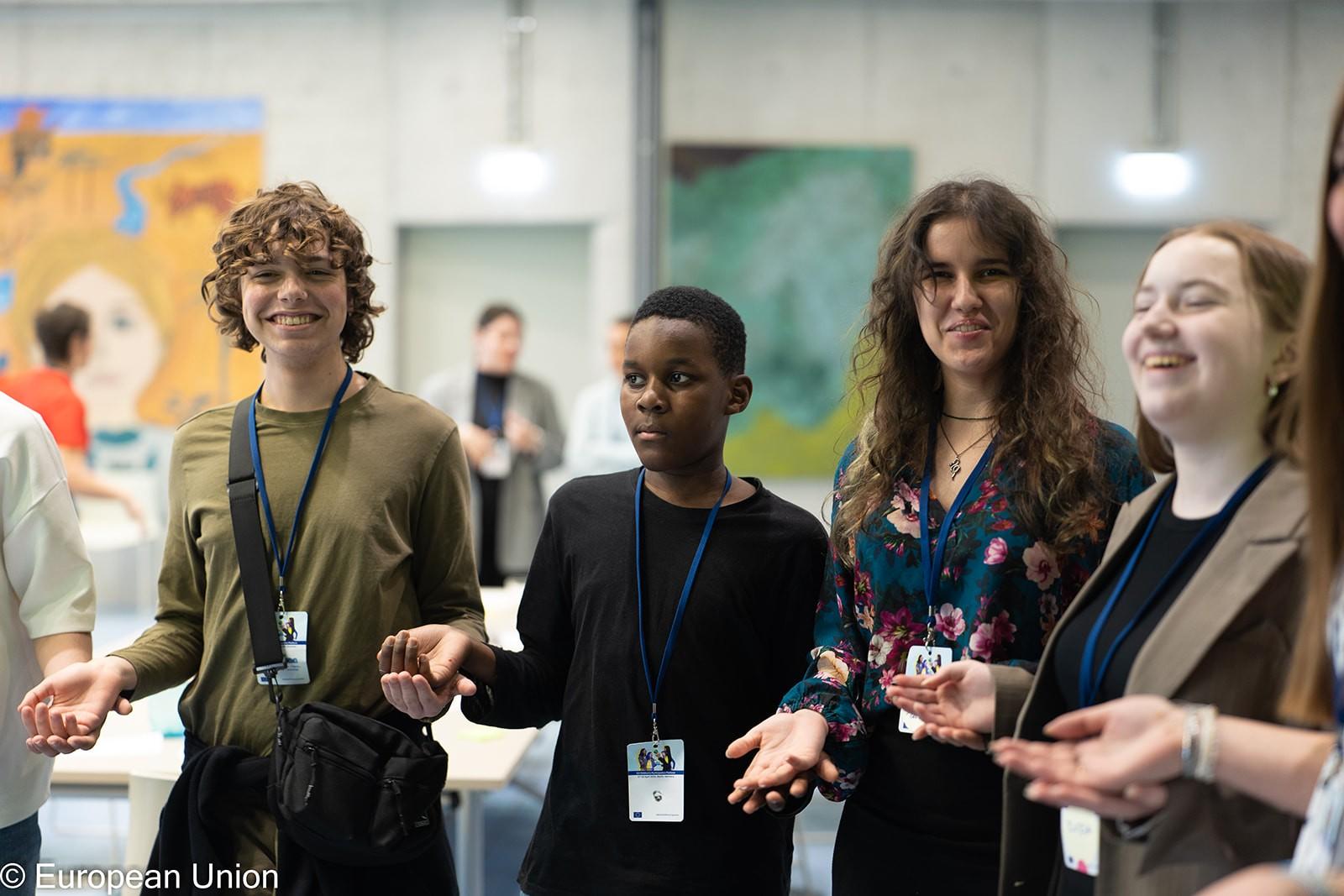
Between 16-18 of April, 16 young Platform members (aged 12-17) and three young experts (aged 18-20) from 10 EU countries came together in Berlin for the Together for Well-being study visit in cooperation with SOS Children's Villages.
This study visit was organised as part of the Platform's 2025-2026 Work Plan, based on the priority topic of mental health identified by children during various consultations and meetings.
Workshops and exchanges
Over the two days, children discussed and explored different aspects of well-being and mental health:
- How different health systems in their countries address mental health and well-being (offline and online)
- What is important for children as prevention and protection of their mental health and well-being
- Existing options to access counselling in schools and outside, and when parental consent is needed
- How children are involved in conversations and decisions about their well-being and mental health support
Good practices from EU-funded projects where children were involved were discussed with mental health professionals:
- I Support my Friends and Mental Health Coaches, German Federal Ministry for Education, Family Affairs, Senior Citizens, Women and Youth, SOS Children’s Villages
- How to bring young voices to local decision makers through a petition, SOS Children’s Villages Youth Council, Germany
- Policies and Resources for Safe and Supportive Schools, Ministry of Education and Research, Unicef, Romania
- Healthier Youth - Addressing the Risks of Online Gambling and Gaming - Reforms and Investments, III High School, Gdynia, Poland
- Child and Youth Wellbeing and Mental Health First, Regional Ministry of Health in Andalusia, Unicef, Spain
- Supporting Mental Health Resilience among Youth in Cyprus, Ministry of Health in Cyprus, Unicef
What happens next?
Based on the two days of discussion, the children prioritised four key areas and formulated recommendations on how to make wellbeing and mental health prevention and protection systems work better.
- Family support and basic needs
- Emotional intelligence, stress management
- Addressing stigma and the consequences of it on mental health
- Access to therapies, including parental consent requirements
These recommendations will be shared with people of the Commission and European Parliament working in these areas, and with national authorities and civil society organisations. Their insights will also be considered in the revision of the EU Strategy on the Rights of the Child and in funding priorities.