
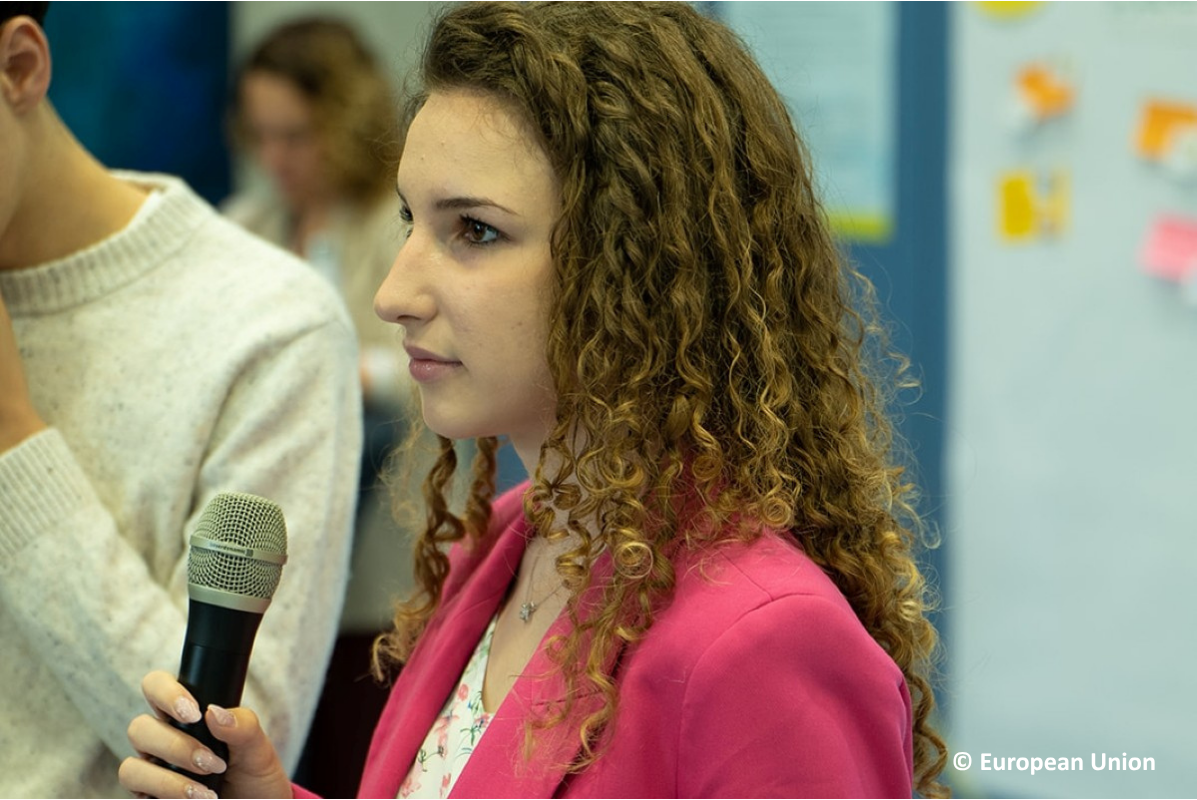
Some members of our alumni group (ages 18-21) are now taking on the role of facilitators. Their previous experience with the Platform is great to support and guide the children, and being younger helps build faster connections. Hear from Adriyana on her first time facilitating at one of our meetings.
Between April 16 and 18, 2026, a Study visit took place in Berlin. The topic was well-being and mental health. The event was organised by the EU Children’s Participation Platform and SOS Children’s Villages.
I was there as an assistant facilitator, and a member of our Rise and Reflect alumni group. It was a great pleasure for me to see the children in the Platform. I have been part of the Platform since it started in 2023, and I am happy to see how much it has grown.
The goal was to hear the ideas of children from all over Europe. In the end, the children chose four main priorities and wrote a detailed plan to send to the Commission. It was very inspiring to meet so many positive and motivated young people who want to make a change.
Day 1: Feeling safe and supported
On the first day, we talked about what makes us feel safe and supported. The most common answers were: having our basic needs met, family support, sports, hobbies, and a healthy school environment.
The children said that schools should help them grow, not make them feel stressed. They shared that things like too many tests, grades, and lack of free time cause a lot of pressure. They felt that this stress, especially after COVID-19, leads to more mental health problems for kids.
At the end of the day, we made a wall with four sections:
- What already helps early?
- What already helps when support is needed?
- What is missing early?
- What is missing when support is needed?
The children shared ideas like the need for more empathy, access to therapy, and safe places to talk about their feelings.
Day 2: Important messages
On the second day, we chose the most important topics and turned them into a “Message from Berlin”:
- Stop the mental health stigma
- Help parents, teachers, and students learn about empathy and emotional intelligence
- Accessibility to therapy
- Support families with courses and basic needs
Mental health is very important for children and young people, but people often ignore it. If we don’t take care of our mind, we cannot be healthy or happy. In these two days, the children worked hard. Their work will help create a better future for children in Europe.